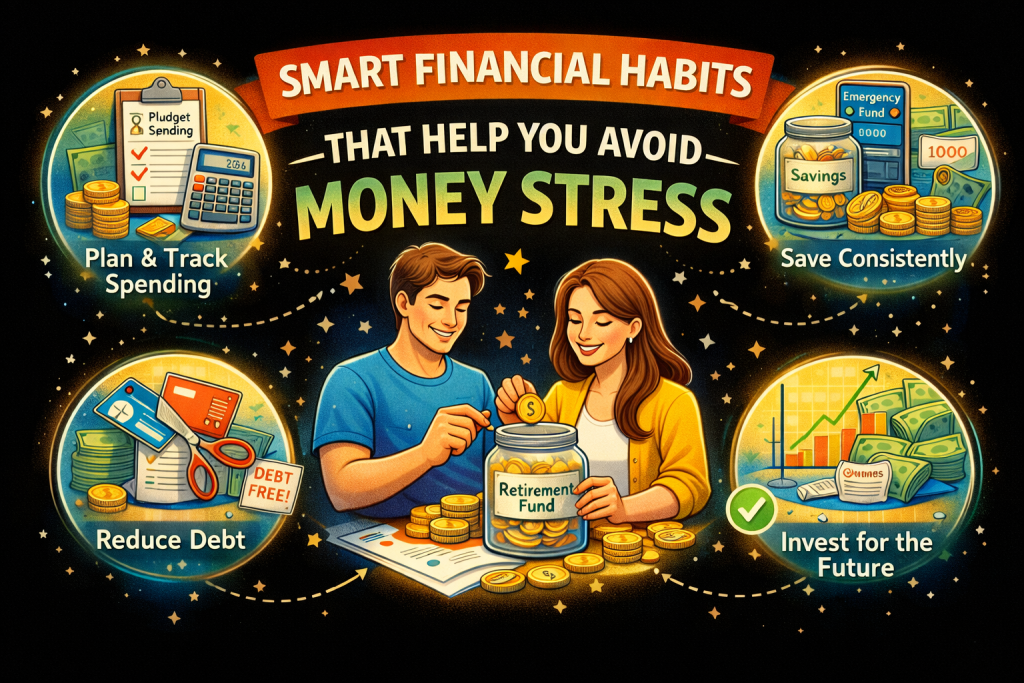
Many young people feel anxious when thinking about money. People often worry about bills, savings, and unexpected expenses every month. This situation creates pressure that affects mood, focus, and daily productivity. Money stress usually appears because financial habits lack structure and clarity.
This article explains smart financial habits that help you avoid money stress in everyday life. Every habit focuses on simplicity, consistency, and balance. These habits support personal finance management, financial wellness, and long-term money peace. Young adults can apply these ideas gradually without feeling overwhelmed.
Understand Your Financial Situation Clearly
The first habit involves understanding your current financial condition. You should calculate your income, expenses, and savings honestly. Clear numbers help you see reality without fear. Awareness reduces uncertainty and anxiety.
Many people avoid checking finances because they feel afraid. Facing numbers helps you regain control and confidence. This habit builds a strong foundation for smart money management. Clarity always reduces stress.
Create a Simple Monthly Budget
A monthly budget gives direction to your money. You should plan where your income goes every month. A simple budget helps you prioritize needs, wants, and savings clearly. Structure creates calm and order.
You should choose a budgeting method that feels realistic. Popular methods like the 50/30/20 rule offer flexibility. This habit supports smart budgeting and emotional balance. A budget should guide, not restrict.
Track Daily Expenses Consistently
Expense tracking builds financial awareness. You should record daily spending like food, transport, and entertainment. This habit shows real patterns and habits clearly. Awareness prevents money leaks.
Many people underestimate small expenses. Tracking reveals hidden costs that increase stress. This practice improves expense tracking and self-control. Small actions create big results.
Build an Emergency Fund Gradually
An emergency fund protects you from unexpected expenses. You should save a small amount every month consistently. This fund creates security and peace of mind. Preparedness reduces panic during emergencies.
You do not need a large amount immediately. Starting small builds discipline and confidence. This habit supports financial stability and emotional safety. Security lowers money stress significantly.
Automate Savings and Bill Payments
Automation simplifies financial habits. You should set automatic transfers for savings and bills. Automation reduces missed payments and late fees. Systems reduce mental load.
This habit helps people who struggle with discipline. Automatic saving builds consistency without effort. Automation supports stress-free finances. Less thinking creates more peace.
Control Lifestyle Inflation Mindfully
Lifestyle inflation increases spending as income grows. You should stay mindful when upgrading lifestyle choices. Conscious decisions protect savings and goals. Awareness prevents unnecessary pressure.
You can enjoy rewards without overspending. Balanced rewards maintain motivation and control. This habit supports long-term financial wellness. Stability feels better than constant upgrades.
Practice Mindful Spending Decisions
Mindful spending improves emotional control. You should pause before buying non-essential items. Asking simple questions helps prevent impulse purchases. Thoughtful decisions reduce regret.
You can apply a waiting period for big purchases. Time helps separate wants from needs. This habit strengthens smart financial habits. Calm decisions protect mental health.
Set Clear Financial Goals
Goals give purpose to money management. You should set realistic short-term and long-term financial goals. Clear goals increase motivation and focus. Direction reduces confusion.
Breaking goals into small steps makes them achievable. Progress feels rewarding and encouraging. This habit supports financial planning for beginners. Purpose replaces stress with excitement.
Increase Financial Knowledge Slowly
Financial education builds confidence and clarity. You should learn basic personal finance topics gradually. Knowledge reduces fear and misinformation. Understanding empowers better decisions.
You can read articles, watch videos, or follow trusted educators. Learning one topic at a time feels manageable. This habit strengthens personal finance education. Knowledge replaces anxiety.
Review Your Finances Regularly
Regular reviews help you stay on track. You should review income, expenses, and goals every month. Reflection highlights progress and mistakes. Awareness encourages improvement.
Adjusting plans improves flexibility and realism. Monthly reviews reduce surprises and stress. This habit supports financial awareness. Consistency builds confidence.
Maintain a Healthy Money Mindset
A healthy mindset shapes financial behavior. You should view money as a tool, not a threat. Positive thinking reduces fear and comparison. Calm thinking improves decisions.
Avoid comparing your finances with others. Everyone has a different journey and timeline. This mindset supports money stress management. Peace starts from within.
I once felt constant anxiety about money every month. I often avoided checking my bank account because I felt overwhelmed. After creating a simple budget, I started tracking expenses daily. Small changes helped me feel more in control.
I built an emergency fund slowly and automated my savings. Over time, my stress reduced significantly. I learned that smart financial habits create calm and confidence. This experience showed me that money peace grows from consistent and mindful actions.
