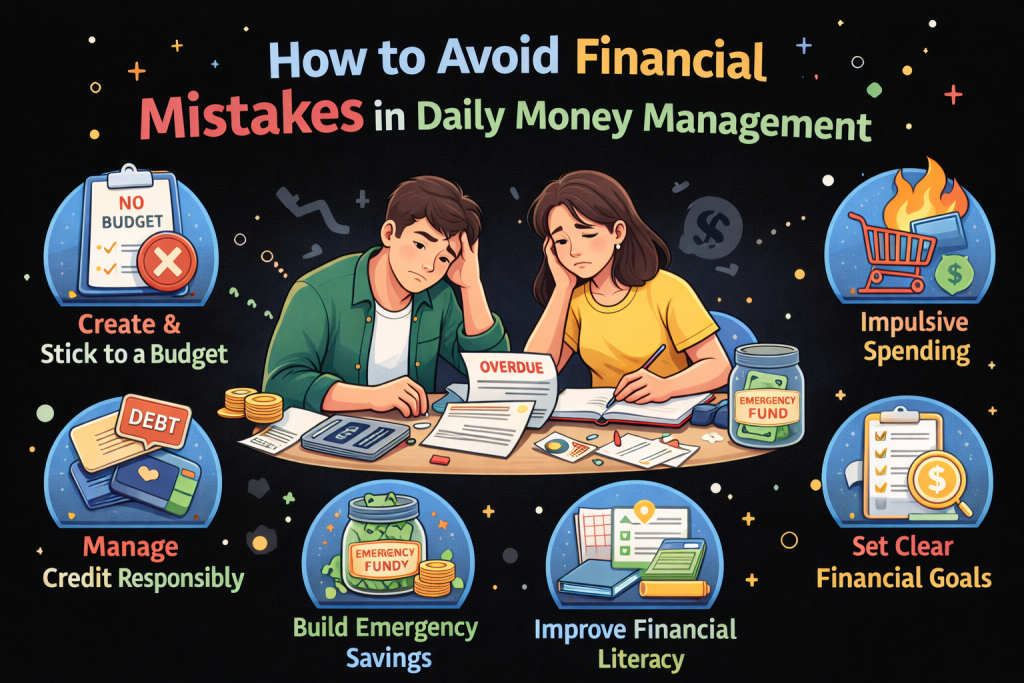
Experience financial problems because they make small mistakes every day. This article explains how to avoid financial mistakes in daily money management with simple and practical steps. Financial mistakes often happen because people ignore basic money management rules. Every individual needs awareness to control income and expenses wisely. Good daily money management helps create a stable and stress-free life.
Modern lifestyles make spending money very easy and very fast. Digital payments and online shopping reduce awareness of real spending. Many young adults feel confused when money runs out unexpectedly. Financial mistakes usually come from habits, not from low income. This article helps readers understand how to manage money better in daily life.
Understand Common Financial Mistakes Early
Every person should understand common financial mistakes before fixing them. Lack of budgeting causes many money problems in daily life. A person often spends money without knowing clear limits. This behavior creates financial imbalance over time. Awareness helps prevent repeated financial mistakes.
Another common mistake comes from ignoring small daily expenses. Coffee, snacks, and subscriptions slowly reduce monthly income. A person often underestimates these costs without tracking. This situation damages personal finance stability. Understanding mistakes is the first step toward better money management.
Create a Simple and Realistic Budget
A budget helps control money and prevent financial mistakes. Every individual should create a budget based on income and lifestyle. A realistic budget allows flexibility without pressure. Budgeting methods support daily money management discipline. This habit reduces overspending consistently.
A person should divide money into needs, savings, and wants. Savings should become a priority in every budget plan. A budget gives direction for daily spending decisions. Clear limits help avoid emotional purchases. Consistent budgeting builds strong financial habits.
Track Daily Expenses Consistently
Expense tracking helps prevent financial mistakes effectively. A person should record daily expenses honestly. This habit shows where money goes every day. Tracking reveals unnecessary expenses clearly. Awareness supports better money management decisions.
A person can use simple notes or budgeting apps. Tracking does not require complex tools or systems. Small daily records create valuable financial insights. Expense tracking improves control over personal finance. This practice supports long-term financial stability.
Avoid Impulsive Spending Habits
Impulsive spending causes many financial mistakes in daily life. Emotional triggers often influence buying decisions. A person should pause before making purchases. This pause helps evaluate real needs and wants. Self-control reduces financial waste.
Shopping lists help control impulsive spending behavior. A person should avoid shopping during emotional stress. Online shopping requires extra discipline due to easy access. Turning off shopping notifications reduces temptation. These habits support healthier money management.
Manage Credit and Debt Wisely
Poor debt management creates serious financial mistakes. A person should understand all credit obligations clearly. High-interest debt increases financial stress over time. Responsible debt management protects personal finance health. Smart decisions prevent long-term problems.
A person should avoid using credit for unnecessary purchases. Paying bills on time helps maintain financial stability. Debt should support needs, not lifestyle desires. Controlled credit usage builds financial trust. Wise debt management supports a secure financial future.
Build Emergency Savings for Protection
Lack of emergency savings creates financial mistakes during unexpected events. A person should prepare an emergency fund gradually. Small savings provide protection and peace of mind. Emergency funds reduce dependence on debt. This habit supports stable money management.
A person should save money consistently, even in small amounts. Automatic saving helps maintain discipline easily. Emergency savings protect daily finances from sudden shocks. Financial security improves with preparation. This habit strengthens personal finance resilience.
Review Financial Plans Regularly
Regular financial reviews help prevent repeated mistakes. A person should review expenses weekly or monthly. Reviews show progress and problem areas clearly. Adjustments improve daily money management effectiveness. Consistent evaluation supports financial growth.
A person should update budgets when income changes. Flexibility helps maintain financial balance. Financial reviews increase responsibility and awareness. This habit prevents long-term money problems. Regular checks strengthen financial habits.
Improve Financial Knowledge Gradually
Lack of financial knowledge causes many daily money management mistakes. A person should learn basic personal finance concepts. Knowledge improves decision-making confidence. Simple education reduces costly errors. Learning supports better financial habits.
A person can read articles or follow trusted financial resources. Continuous learning improves money management skills. Financial literacy protects individuals from scams. Knowledge builds independence and stability. Education supports long-term financial success.
Set Clear Financial Goals for Direction
Financial goals guide daily money management decisions. A person should set short-term and long-term goals. Clear goals reduce careless spending habits. Goals provide motivation and focus. Purpose improves financial discipline.
A person should write financial goals clearly. Written goals increase commitment and responsibility. Progress tracking builds confidence gradually. Goals help avoid unnecessary financial mistakes. Direction creates a stable financial future.
I personally made many financial mistakes during my early working years. I spent money without budgeting and ignored expense tracking. This behavior caused stress and frequent shortages. I decided to learn daily money management seriously. I started tracking expenses and creating a simple budget.
I reduced impulsive spending and built small emergency savings. I learned to manage credit wisely and set financial goals. These changes improved my financial confidence and stability. Now I feel more in control of my personal finance. This experience taught me that avoiding financial mistakes starts with small daily habits.
