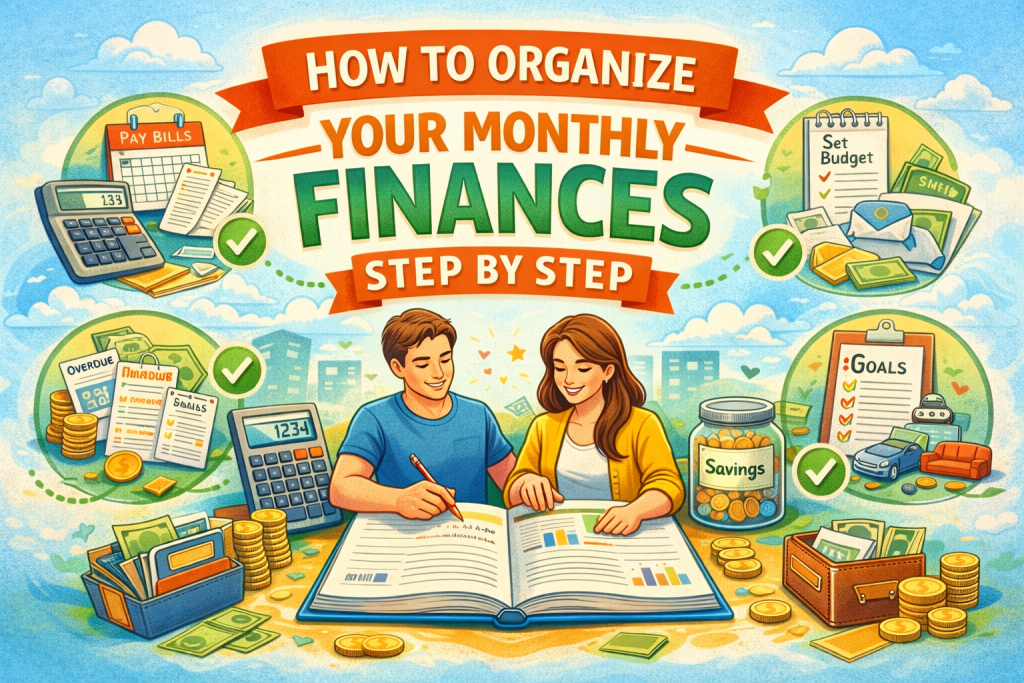
Many young adults feel confused when managing money every month. People often feel stressed because income comes and goes quickly. Monthly bills, daily needs, and lifestyle expenses can feel overwhelming. This situation makes monthly finances hard to control without a clear plan.
This article explains how to organize your monthly finances step by step in a simple and realistic way. Every step focuses on clarity, balance, and consistency. These methods support personal finance management, smart budgeting, and long-term financial stability. Young people can apply these steps without feeling restricted or pressured.
Understand Your Monthly Income Clearly
The first step requires understanding your total monthly income. You should calculate income from salary, side jobs, or freelance work. This calculation gives a clear financial starting point. Accurate numbers help you avoid unrealistic budgeting.
Many people forget irregular income sources. You should include bonuses or extra earnings if they are consistent. This habit improves monthly budget planning. Clear income data creates strong financial awareness.
List All Fixed Monthly Expenses
The second step focuses on fixed expenses. You should list rent, utilities, internet, insurance, and subscriptions. These expenses usually stay the same every month. Fixed expenses form the foundation of your budget.
Writing these costs helps you see financial obligations clearly. This step prevents missed payments and late fees. Organized expense tracking supports financial discipline. Stability starts with predictable costs.
Track Variable Spending Honestly
Variable spending needs careful attention. You should track food, transportation, entertainment, and shopping costs. These expenses often change depending on habits. Honest tracking reveals real spending patterns.
Many people underestimate variable expenses. You should record daily spending using notes or apps. This habit strengthens expense tracking skills. Awareness helps control unnecessary spending.
Set Clear Monthly Financial Goals
Goals give direction to money management. You should set realistic monthly goals like saving, paying debt, or limiting spending. Clear goals increase motivation and focus. Purpose makes budgeting easier.
You can divide goals into short-term and long-term categories. Small targets feel more achievable and encouraging. This strategy supports financial planning for beginners. Consistent goals create progress over time.
Create a Simple and Flexible Budget
A budget organizes income and expenses clearly. You should choose a budgeting method that feels comfortable. Popular options include zero-based budgeting or the 50/30/20 rule. Flexibility helps maintain consistency.
You should leave room for enjoyment and emergencies. A flexible budget reduces stress and guilt. This approach supports smart budgeting and emotional balance. Sustainable budgets work better than strict ones.
Use Tools to Organize Your Finances
Financial tools simplify money management. You can use budgeting apps, spreadsheets, or notebooks. These tools help record transactions accurately. Organized records improve decision-making.
Technology makes financial organization easier for young people. Automatic reminders prevent missed payments. Tools support personal finance organization effectively. Consistency improves with simple systems.
Build a Monthly Saving Routine
Saving should be part of every budget. You should save money at the beginning of the month. This habit prioritizes future security over leftover saving. Consistent saving builds confidence.
Automatic transfers help maintain discipline. Small amounts saved regularly create long-term growth. This practice supports monthly savings habits. Saving becomes effortless with routine.
Review and Adjust Your Finances Every Month
Financial organization requires regular evaluation. You should review your budget at the end of each month. This review highlights successes and mistakes. Learning improves future planning.
You should adjust categories based on real spending. Flexibility allows growth and adaptation. Monthly reviews strengthen financial awareness. Progress comes from reflection and correction.
Control Lifestyle Inflation Mindfully
Lifestyle inflation happens when spending increases with income. You should be careful when income grows. Maintaining simple habits protects savings. Conscious decisions prevent unnecessary upgrades.
You can reward yourself without overspending. Balanced rewards maintain motivation and control. This mindset supports long-term financial stability. Awareness protects financial goals.
Build a Healthy Money Mindset
Money organization involves mindset and habits. You should view money as a tool, not a source of stress. A positive mindset reduces anxiety and impulsive decisions. Confidence grows with practice.
Learning financial basics improves decision quality. You can explore books, articles, or trusted online resources. Knowledge empowers better choices. Education strengthens financial independence.
I once struggled to manage my monthly finances consistently. I often spent money without tracking expenses properly. After listing income and expenses, I started seeing patterns clearly. Small changes made a big difference.
I created a simple budget and reviewed it every month. I allowed flexibility for enjoyment without guilt. Over time, my savings grew steadily. This experience taught me that organizing monthly finances step by step creates peace and control.
